
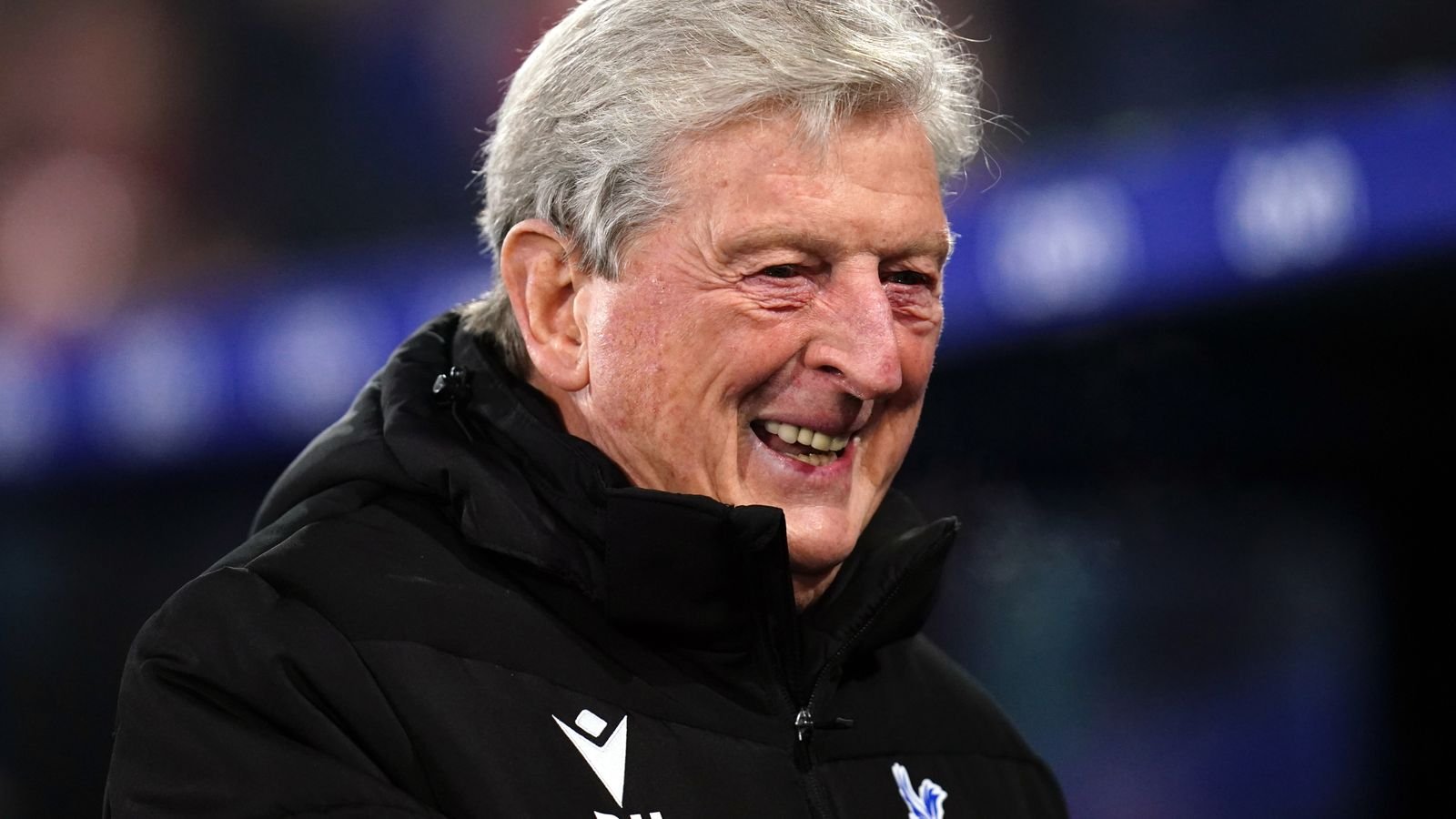
Roy Hodgson’s return from retirement to take the reins at second-tier Bristol City for just seven games – 44 years after he left the club in 1982 – momentarily seemed like an April fool come six days early when it was announced last Friday.
Why would the 78-year-old, whose health had played a part in his departure from Crystal Palace two years ago, want to step back into the management hotseat at a club with nothing to play for and with little time to make a lasting impression?
It turns out, even the man himself is not certain. “I don’t know what prompted me to even consider it,” he said at his unveiling on Monday. “I’ve been perfectly happy in this retirement period, if a little bit bored from time to time.”
Hodgson’s arrival and unlikely decision to return to the West Country after almost half a century has only piqued the interest around a man whose past CV includes Inter Milan, Liverpool and England – but nothing below the top flight in England dating all the way back to his first spell in Bristol.
His appointment blows away the previous record for the longest gap between managerial stints at the same English club, and gives Bristol the curious statistic of now housing both of the oldest managers in the EFL – 63-year-old Steve Evans is in charge of Rovers.
For the wider footballing world, the whole story is a welcome source of levity more than ridicule and will no doubt become a fine answer to a pub quiz question within a few years.
But beneath that lies a more serious reality for Bristol City, one of a club approaching the latest in a seemingly never-ending series of crossroads largely of their own making.

Former England manager Roy Hodgson, who is 78, talks to Sky Sports about his appointment as the new interim head coach of Sky Bet Championship club Bristol City
Having lurched between both playing and management styles across their recent managers, appointing Hodgson somehow still breaks new ground. The thinking of the club is to ask the vastly-experienced boss to “help set the standards and values at the club” ahead of naming a permanent successor to Gerhard Struber over the summer.
The logic is sound that few can compete with Hodgson’s decades of footballing knowledge at the top of the game but what standards he – or anyone – can embed in barely five weeks before City’s players jet off on holiday is more questionable.
So is Hodgson’s ability to drill those standards into his players given he made the point, quite understandably, that even conducting his various media duties on his first day had proved a taxing endeavour.
More generally, the last fortnight edges City further away from a reputation of stability, patience and a desire to build from within which they had spent years developing and retained until relatively recently.
Why an existing member of the backroom team, familiar with the playing staff and perhaps with head coach aspirations in the future, was not worth giving a chance to impress with only pride on the line in the rest of the season is a question which may never be answered.
City’s relatively tranquil standing began to erode with the sacking of Nigel Pearson in November 2023 and has since gathered pace. Charlie Boss, City’s fourth CEO since October 2022, was the man to dismiss Struber while the search for a fourth permanent head coach in less than two-and-a-half years will be led by a sporting director who is also yet to be appointed.
Whoever succeeds Hodgson will follow on from an old-head pragmatist in Pearson, a City Football Group-alumni in Liam Manning and an Austrian rock-and-roll football purveyor in Struber. The old cliche of a club always seeking the antithesis of its previous manager has proved remarkably prescient at Ashton Gate.

Gerhard Struber’s last game in charge at Ashton Gate was a 1-0 defeat by West Brom before the international break
There is a hope that said sporting director can return some harmony to Ashton Gate, so long as they prove the long-term appointment badly needed – and can draw some inspiration from the likes of Brentford and Brighton so that the club’s philosophies remain consistent regardless of who is in charge.
But history is a great teacher, and there is a reason the Robins’ top-six finish last season was their first in the Championship since 2008.
City’s ideologies since that time – and there have been plenty – have generally been developed with the best of intent, but their implementation has often fallen flat and enthusiasm soon lost.
Many have been tried. Buying the best up-and-coming talent. Polishing rough diamonds. Utilising the academy. Just over a decade ago the club unveiled a ‘five-pillar’ strategy for long-term development, but within a year it was never mentioned again. Consequently, there is no great belief around the club that this next dawn will be any more real than those before it.
City’s next permanent boss certainly will not be an almost octogenarian ex-England manager. Even he himself feels he is too old for the post. Beyond that, it is hard to pinpoint their identity – as much as it is the club’s.